
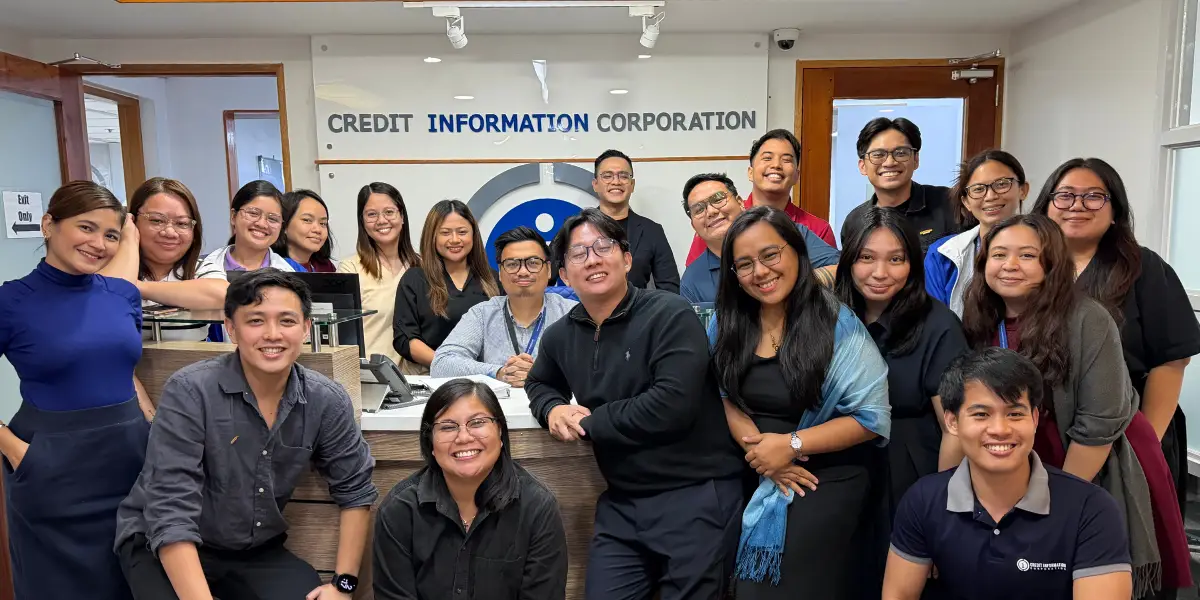

KasKasan Buddies x Credit Information Corporation
Our team joined the Credit Information Corporation (CIC) for an R.A. 9510 Orientation. Here’s everything you need to know from that session.
PartnerCredit Information Corporation (CIC)
Eligible bank
Valid untilDec 31, 2030
LocationsSee promo terms
Last updatedSep 14, 2026
Know the offer before you swipe.
We Sat Down With the Credit Information Corporation (CIC). Here’s Everything We Learned
- Our team joined the Credit Information Corporation (CIC) for an R.A. 9510 Orientation. Here’s everything you need to know from that session.
- Published: March 10, 2026 | By Chelsea Dione of KKB Research Team
- Another awesome update, KKBuddies!
- This morning, our team joined the Credit Information Corporation (CIC) for an exclusive R.A. 9510 Orientation: a four-hour deep dive into how the Philippine credit information system actually works. We asked the questions our community has been asking for years, and we got real answers straight from the source.
- If you've ever been confused about how your credit score is computed, what happens when there's an error on your report, or what your rights are as a borrower, this one's for you.
What Is CIC and Why Should You Care?
- The Credit Information Corporation (CIC) is the government agency behind the Philippine Credit Information System, created under Republic Act 9510. Every time you apply for a credit card or a loan, the lenders involved are required to report your credit data to CIC. That data builds your credit profile, and your credit profile affects whether you get approved, at what rate, and under what terms.
- Understanding how CIC works is one of the most practical things you can do as a Filipino borrower. Here's everything we learned today.
How Your Credit Score Is Actually Computed
- Your credit score is based on the data that lenders submit to CIC: both the good and the not-so-good. Private companies called Special Accessing Entities (SAEs) are the ones that take that data and compute your actual score.
- The most important thing you can do to protect your credit profile: pay on time and in the right amount. Everything else builds from there.
- A few specific things worth knowing:
- On credit utilization: The 30% rule (keeping your credit card spending at or below 30% of your limit) is a widely recognized benchmark. Lenders ultimately have their own criteria, but staying within that range is a safe habit to build.
- On BNPL: Using Buy Now, Pay Later services won't significantly hurt your score on its own, as long as you pay on time and in full. It's the payment behavior that matters, not the product itself.
- On old, unused credit cards: Keeping them open isn't necessarily a problem. What lenders look at most is whether your payment history is clean.
How Often Banks Are Required to Report Your Data
- Banks and financial institutions are required to submit credit data to CIC on or before the 10th of every month. Your credit profile is updated regularly, but there can be a gap between when something happens and when it shows up on your report. If a fully paid loan hasn't reflected yet, this monthly reporting window is likely why.
What to Do If There's an Error on Your Report
- This is one of the most common concerns in our community: errors on credit reports, or loans appearing under your name that you never took out. Here's the exact process CIC laid out:
- Step 1: Go directly to the lender or financial institution that submitted the data first. Don't file a dispute with CIC right away. The lender may still be in the process of updating their records.
- Step 2: Only after exhausting all options with the lender (and the error is still showing) should you escalate and file a formal dispute with CIC.
- One important thing to know about timelines: negative information that has been fully settled stays in the CIC database for up to three years from the date it was resolved. It doesn't disappear the moment you pay it off. Plan accordingly if you're preparing for a major credit application.
- On submitting entities who fail to submit accurate or updated data: CIC confirmed they can be fined up to ₱30,000 per day for non-compliance. That's a meaningful consequence, and it's good to know it exists.
On Fees for Accessing Your Credit Report
- Accessing your credit report through CIC involves an administrative fee that covers their processing costs. The additional fees you may encounter through accredited bureaus like TransUnion or CIBI come from the specialized tools those bureaus use, and not from CIC directly.
A Right Every Filipino Borrower Should Know
- One point from this morning's session that we think every KKBuddy needs to hear:
- If a bank or lender rejects your credit card or loan application, they are required to explain why. Refusing to give you a reason is a violation of your rights as a borrower. You are entitled to ask, and they are obligated to answer.
- If you've ever been rejected with no explanation, you now know you can AND should ask for one.
On Fraud and Identity Theft
- If you suspect someone has used your identity to apply for credit products without your knowledge, act quickly. Contact the lender involved directly and document everything. From there, you can escalate to CIC if needed.
- CIC shared that they currently have no known instances of a data breach within their system. Accredited institutions connect to CIC through secured, IP-whitelisted channels. That said, staying on top of your credit report regularly is still the best way to catch anything unusual early.
On Reaching More Filipinos
- One part of today's conversation that resonated with us was the discussion around access. CIC acknowledged that many Filipinos, especially those in rural areas and senior citizens, still find it difficult to access credit information digitally. Their plan is to work through LGUs and cooperatives to bring credit education to more communities at the ground level.
- This is exactly the kind of work we want to be part of. Reaching Filipinos outside Metro Manila, in provinces and key cities, and making financial education genuinely accessible. That's what we're building toward together with CCAP as well.
Why We're Sharing All of This
- We attended this orientation because the more you understand about how your credit data works, the better equipped you are to protect it, build it, and use it to your advantage. That's always been what KKB is about.
- We'll be breaking down more from today's session in the coming days, including a closer look at the Philippine Credit Information System and what each type of entity actually does.
- Stay with us, KKBuddies. There's a lot more coming.
- Wrapping up a great afternoon with Atty. Ben Joshua A. Baltazar, President and CEO of the Credit Information Corporation, and the KasKasan Buddies team. Thank you for having us, CIC!
Stay Updated
- The best financial tips, latest promos, news promos, resources, and everything coming out of this partnership goes straight to our community first. Follow us on social media so you never miss an update.
- 🌐 KasKasan Buddies on Facebook
- 📱 Download the KasKasan Buddies App: App Store | Google Play
- We'll update this article as more details become available. For the latest, follow us on our official social media pages.